








We’ve been treated to a daily, almost hourly summary over the last few days.
The ever-evolving table within a table; the one which comprises the 12 nations sitting third in their respective World Cup 2026 groups.
Some have been on four points, others three, a few have even only managed two draws, but at some point or other, all have been in with a chance of reaching the Last 32 in the US, Mexico and Canada.
To try and explain in a succinct manner, the eight best third-placed teams qualify for the Last 32 based on a ranking that, in order, takes into account: points, goal difference, goals scored, fair-play status and FIFA ranking.
There was always going to be a trade-off in expanding the tournament from 32 to 48 teams. Too many teams to appreciate fully the complexities and curiosities of each one; certainly, too many matches to track; the possibility of uncompetitive games, of slightly hard-to-watch walkovers.
In Qatar in 2022, the maths was simple – eight groups of four teams, with the top two going through to a last 16, then quarter-finals, semi-finals and a final.
It worked!
By adding another 16 nations, FIFA had to find a way to get to a symmetrical knockout stage. As it stands, of the 12, Scotland are all but gone – a partly self-inflicted 3-0 defeat to Brazil proving too damaging to the goal difference.
Algeria and Congo – who did so well to hold Portugal in their first outing – still have a chance, while South Korea, with a negative goal difference following a surprise reverse to South Africa, are hoping the aforementioned slip up.
They may be an ageing team but it would be staggering if Croatia, the bronze medallists in the tournament in 2022, don’t reach the knockout stages, yet they will need to produce World Cup 2026 highlights against Ghana to be sure.
Realistically, a record of three points and goal difference of -1 is probably going to be enough.
Now call me cynical, but I wish I had looked at our SBOTOP World Cup 2026 betting odds ahead of Thursday’s Group D match between Australia and Paraguay.
The teams went into the contest lying second and third in Group D and both on three points.
Four points is almost certain to be enough to take one of the eight third-placed qualifying slots, so it created a situation in which the teams knew that a draw was helpful to both. The match finished 0-0.
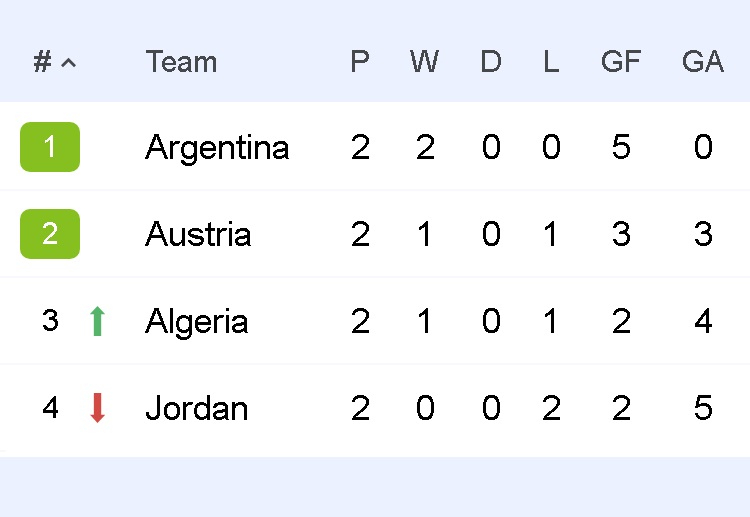
There could be a repeat scenario when Austria and Algeria lock horns in Group J with both teams knowing a draw will see them both progress.
What an irony that would be after Algeria were the victims of a 1982 scandal at the World Cup in Spain.
For supporters old enough to remember, eliminating Austria would carry a satisfaction far beyond three points. For younger fans, the grievance is inherited and less raw.
At the time, Algeria’s federation lodged complaints with the game’s governing body but they went nowhere. The episode did, however, produce one lasting institutional consequence, with FIFA mandating that final group matches be played simultaneously. They have been ever since.
Do I think this new system works? Yes.
Do I think the system is necessary? No.
But it looks like it is here to stay!
●●●
CHECK OUT OUR BLOG FOR MORE FOOTBALL STORIES & ODDS
Stay updated with everything sports and betting.